
Spoiler Alert: This article discusses themes and plot elements from Maa Behen on Netflix.

At its core, Maa Behen is not simply about one woman or one situation. It is about perception. More specifically, it is about the gap between how women are often viewed through a male lens and the reality of who they actually are.
The title itself is clever.
Women are frequently placed into categories that society finds comfortable; mother, sister, wife, daughter. These labels are often presented as a form of respect. Yet, the moment a woman behaves outside the expectations attached to those roles, that respect can disappear remarkably quickly.
The film holds a mirror to a reality many women continue to navigate every day. Here are five ways Maa Behen reflects modern womanhood.
#1 The Male Lens: A Woman’s Worth Is Tied to Her Sexual History
Reality: A Woman’s Character Cannot Be Measured by Her Relationships
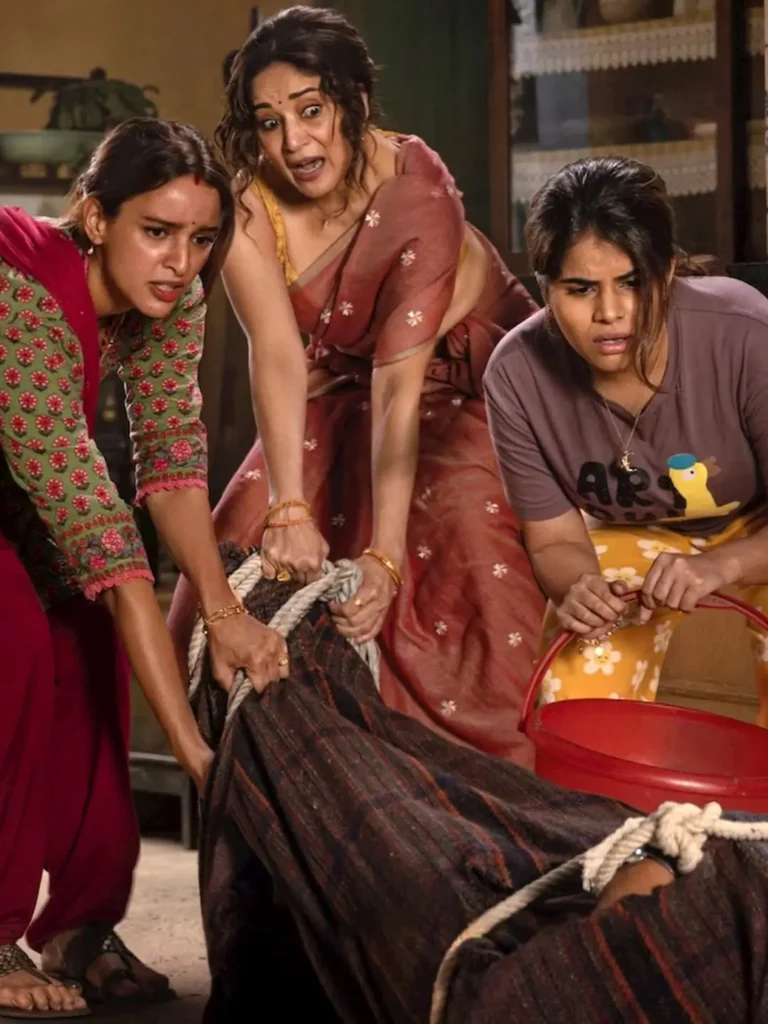
One of the most uncomfortable truths explored in Maa Behen is how quickly a woman’s private life becomes public judgement.
A woman’s dating history, romantic choices, relationships, and sexuality often become evidence in a case she never agreed to stand trial for. People begin asking questions that have little to do with her values, integrity, intelligence, or achievements.
How many people has she dated?
What kind of woman is she?
Can she be trusted?
Is she respectable?
The assumptions arrive before the facts do. Meanwhile, men are often granted far greater freedom. Similar choices are dismissed as experience, confidence, or simply part of growing up.
This double standard continues to exist despite decades of conversations about equality. A woman’s worth is still frequently linked to her ability to conform to an ideal version of femininity, while men are allowed far more room to be imperfect.
#2 The Male Lens: Independent Women Are Intimidating
Reality: Independence Is Not a Threat
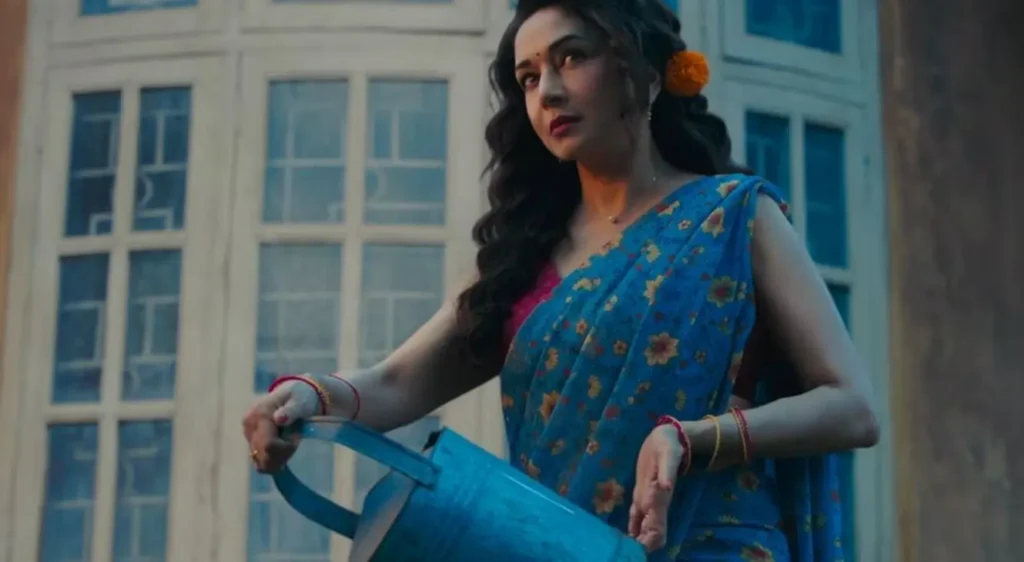
There is a strange contradiction in modern society. People love the idea of an independent woman. They celebrate women who pursue careers, make their own decisions, build businesses, travel alone, and speak confidently about what they want.
Until that independence becomes visible, she no longer seeks approval, or she stops making herself smaller for the comfort of others.
Then the narrative often changes. Suddenly she is arrogant. Difficult. Too ambitious, outspoken, intimidating.
What Maa Behen captures so well is that the problem is rarely the woman’s independence itself.
The problem is what that independence represents. An independent woman cannot be easily controlled.She makes choices based on her own values rather than external expectations. And, for people who are accustomed to women prioritising everyone else’s needs first, that can feel threatening.
Confidence in women is often celebrated in theory but challenged in practice.
#3 The Male Lens: Women Must Be Easily Categorised
Reality: Women Are Allowed to Be Complex
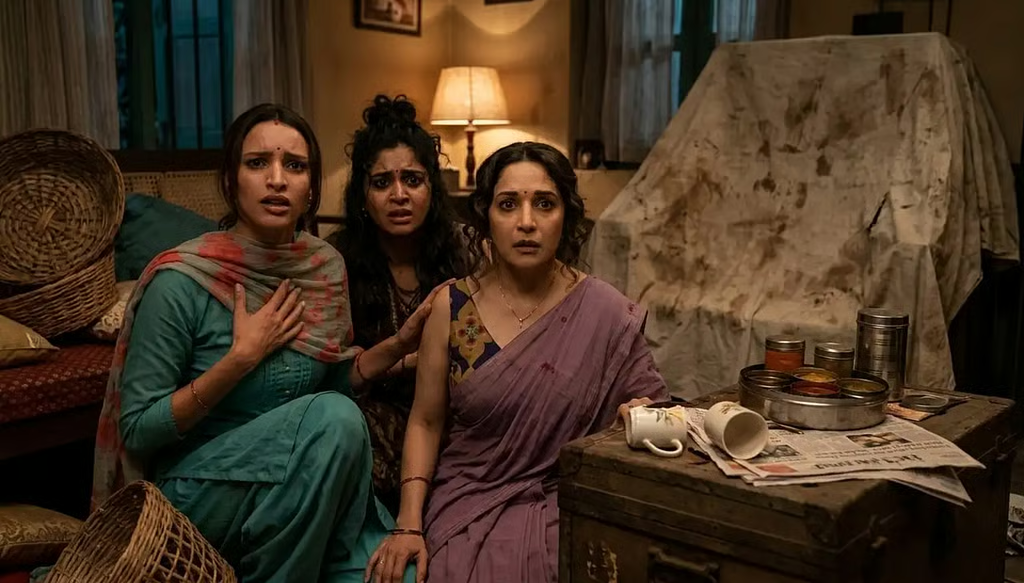
Society has always loved labels.
The good girl. The traditional girl. The modern girl. The career woman. The wife material. The attention seeker.
These categories make people comfortable because they create the illusion that women can be easily understood. The problem is that real women rarely fit neatly into any of them.
A woman can be ambitious and nurturing. Confident and vulnerable. Independent and deeply connected to her family. Successful and still uncertain about some aspects of her life.
Human beings are complex. Yet, women are often pressured to choose one version of themselves and remain there. The moment they step outside that box, people become uncomfortable.
What I appreciated most about Maa Behen was its refusal to simplify its female characters.
They are not perfect role models designed to teach lessons.
They are simply human and perhaps that is exactly the point.
#4 The Male Lens: A Woman’s Reputation Is Public Property
Reality: Women Do Not Owe Society Constant Explanations
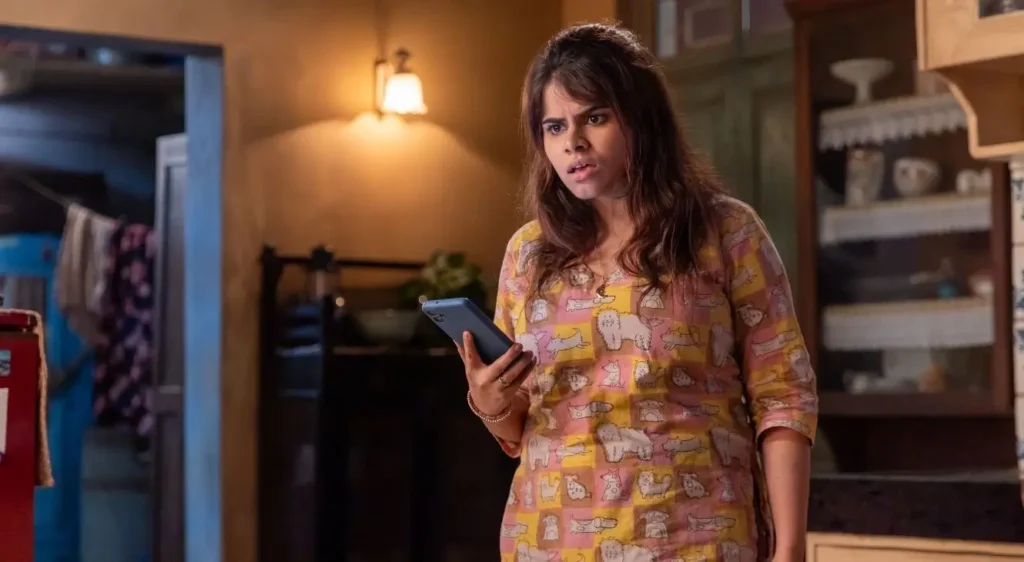
Few things are monitored more closely than a woman’s choices.
Her appearance, relationships, marriage, career, social life, motherhood, her absence of motherhood, etc.
The questions never seem to end.
Why is she still single? Why did she get divorced? Why does she work so much? Why doesn’t she work more? Why is she dressing like that? Why isn’t she dressing differently?
Women are often expected to justify decisions that men are allowed to make without explanation.
The rise of social media has only amplified this reality. Today, opinions arrive faster than ever before. A screenshot becomes a judgement. A rumour becomes a narrative. A moment becomes a permanent label.
Maa Behen highlights how exhausting it can be to exist in a world where so many people feel entitled to have an opinion about a woman’s life. And more importantly, it reminds us that women do not owe anyone a defence for living on their own terms.
#5 The Male Lens: Women Exist in Relation to Men
Reality: Women Are Complete People on Their Own
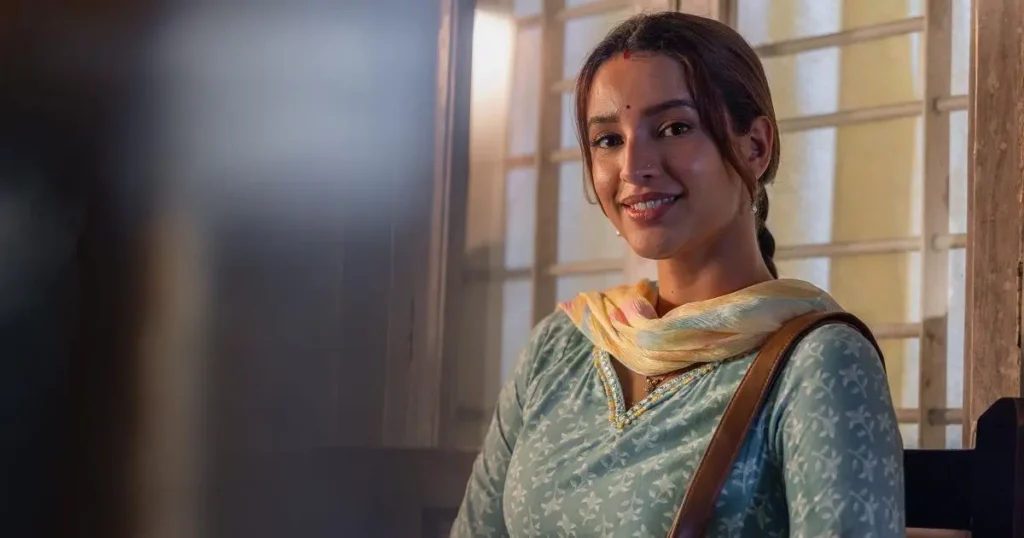
Perhaps the most powerful theme running through Maa Behen is the idea that women are often defined by their relationships to others.
Someone’s daughter. Someone’s sister. Someone’s wife. Someone’s mother.
While these relationships are meaningful, they should never be the entirety of a woman’s identity. Women have ambitions that exist outside of marriage.Dreams that exist outside of motherhood. Personalities that exist outside of romantic relationships.
Yet, society continues to frame women’s lives around the people connected to them rather than around who they are as individuals.
This is why conversations about female autonomy still feel surprisingly radical. True autonomy requires recognising women as complete human beings, not supporting characters in someone else’s story.
Maa Behen challenges viewers to think about how often women are reduced to roles rather than recognised as people, and it does so without preaching.
It simply shows us the consequences of that mindset.
Final Thoughts

What makes Maa Behen so effective is that it never feels like it is talking about one woman.
It is talking about a system. A system that praises women when they fit expectations and criticises them when they do not. A system that continues to view women through assumptions before understanding them as individuals. A system that often sees women through a lens built by tradition, stereotypes, and discomfort rather than reality.
That is why the film lingers long after the credits roll. Beneath the humour, drama, and social commentary is a question that remains deeply relevant today:
“How many women are still being judged for who people think they are, instead of who they actually are?”
And, perhaps more importantly, what would happen if we finally stopped looking through the lens and started seeing the person?